Kalmar, Sweden
Step into Sweden's finest Renaissance palace
Ringed by seawater and eight centuries of history, Kalmar Slott is where the Kalmar Union was sealed in 1397 and where the Vasa kings later built one of Scandinavia's most lavish royal courts. This is the fortress that guarded Sweden's south-east coast — and the palace that became its most beautiful.
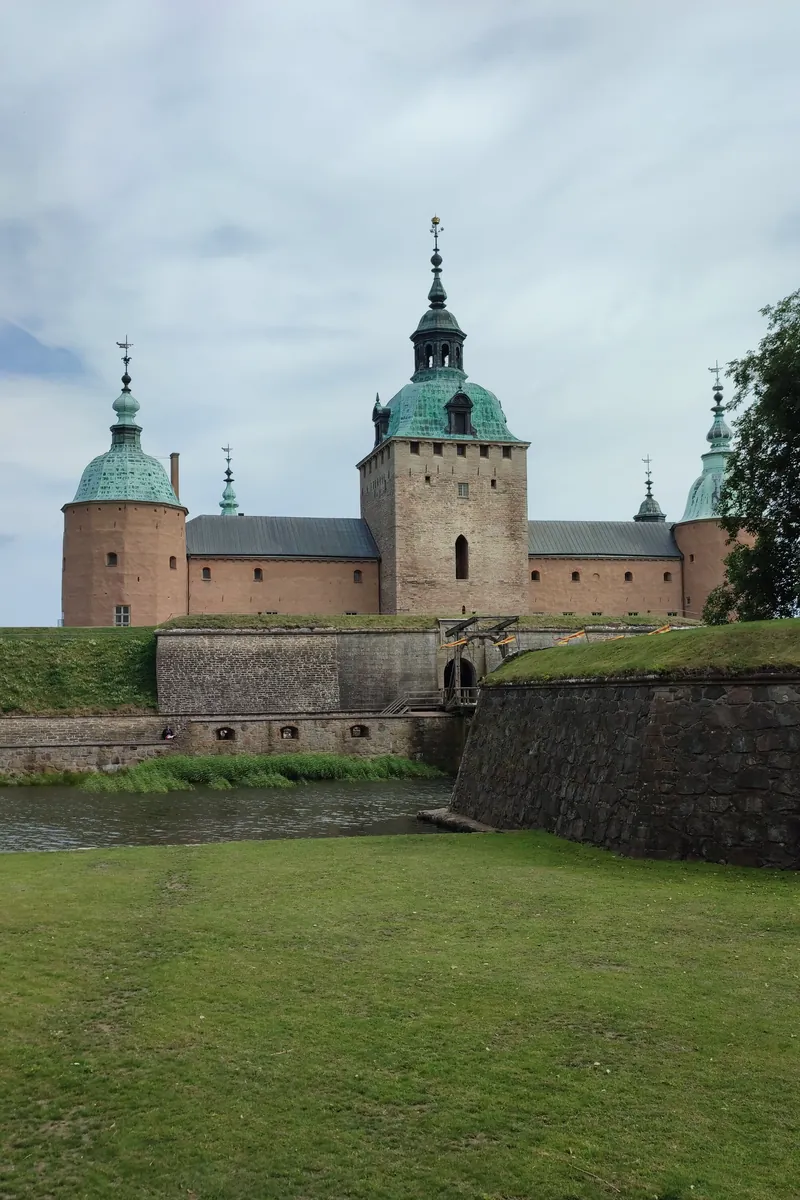
- 1397Where the Kalmar Union uniting Sweden, Norway and Denmark was signed
- c.1180Origins as a defensive tower guarding the Kalmar strait
- 3 kingsRebuilt into a Renaissance palace by Gustav I, Erik XIV and Johan III
- Best-preservedRegarded as the best-preserved Renaissance castle in the Nordic countries
Checked before ticketingThe castle is not open every day outside summer. Before we ticket your date we check the opening calendar, and we tell you if your day is closed or shortened.
Tickets
The deed of admission
One admission, valid all day on the date you choose — no time slot. It covers the Renaissance state rooms, the Golden Hall, the Checkered Hall, the royal apartments and the prison tower. Choose your visitor type below; the family ticket comes in three sizes.
- Skip the ticket officeWalk straight to the entrance with your ticket ready
- Your admission, securedBooked and confirmed before you travel
- Every hall and tower includedGolden Hall, Queen's Suite, Checkered Hall and the castle's prison tower, one ticket
The Three Crowns seal
Family ticket
2 adults + 2 children aged 4–19 · full access, valid all day on your chosen date
€93
- Date-specific admission for 2 adults and 2 children aged 4–19
- Access to the Golden Hall, Queen's Suite, King's Chamber, Checkered Hall and prison tower
- The most economical way for a smaller family to visit together
- Booking handled in your own language
2 adults + 3 children aged 4–19 · full access, valid all day on your chosen date
€111
- Date-specific admission for 2 adults and 3 children aged 4–19
- Access to the Golden Hall, Queen's Suite, King's Chamber, Checkered Hall and prison tower
- The most economical way for a mid-sized family to visit together
- Booking handled in your own language
2 adults + 4 children aged 4–19 · full access, valid all day on your chosen date
€129
- Date-specific admission for 2 adults and 4 children aged 4–19
- Access to the Golden Hall, Queen's Suite, King's Chamber, Checkered Hall and prison tower
- The most economical way for a large family to visit together
- Booking handled in your own language
Children under 4 enter free with no ticket.
Individual admission
- Most chosen
Adult admission
One adult · full access, valid all day on your chosen date
€31per person
- Date-specific admission to the Renaissance state rooms and the medieval fortifications
- Access to the Golden Hall, Queen's Suite, King's Chamber, Checkered Hall and prison tower
- No fixed time slot — valid any time during opening hours on your date
-
Youth admission
One youth, aged 4–19 · full access, valid all day on your chosen date
€22per person
- Date-specific admission to the Renaissance state rooms and the medieval fortifications
- Access to the Golden Hall, Queen's Suite, King's Chamber, Checkered Hall and prison tower
- For children and youth aged 4 to 19 — children under 4 enter free
-
Student admission
One student, with valid student ID
€28per person
- Date-specific admission to the Renaissance state rooms and the medieval fortifications
- Access to the Golden Hall, Queen's Suite, King's Chamber, Checkered Hall and prison tower
- Valid student ID required at the gate
-
Senior admission
One senior · full access, valid all day on your chosen date
€28per person
- Date-specific admission to the Renaissance state rooms and the medieval fortifications
- Access to the Golden Hall, Queen's Suite, King's Chamber, Checkered Hall and prison tower
- Senior concession rate — proof of age may be requested at the gate
The castle
Three pews in the castle church
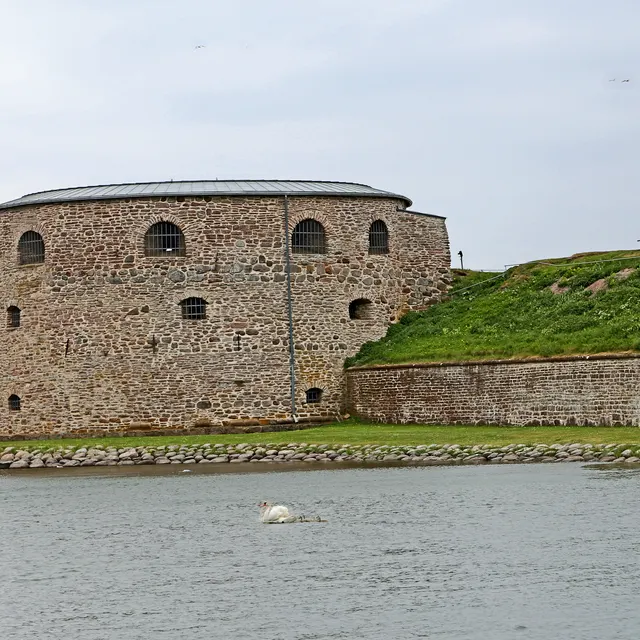
Kalmar Castle stands on a small island at the mouth of the Kalmar strait, on Sweden's south-east coast facing the island of Öland. Its origins reach back to around 1180, when a round defensive tower was raised to guard this strategic stretch of the Baltic. During the 13th century it grew into a proper fortress with a ring wall and round corner towers — the castle's own history credits King Magnus Ladulås in the later 1200s, while the national property board dates the expansion earlier, so the attribution is not settled. In 1397 that fortress hosted one of the most consequential meetings in Scandinavian history, when the Kalmar Union bound Sweden, Norway and Denmark under a single crown.
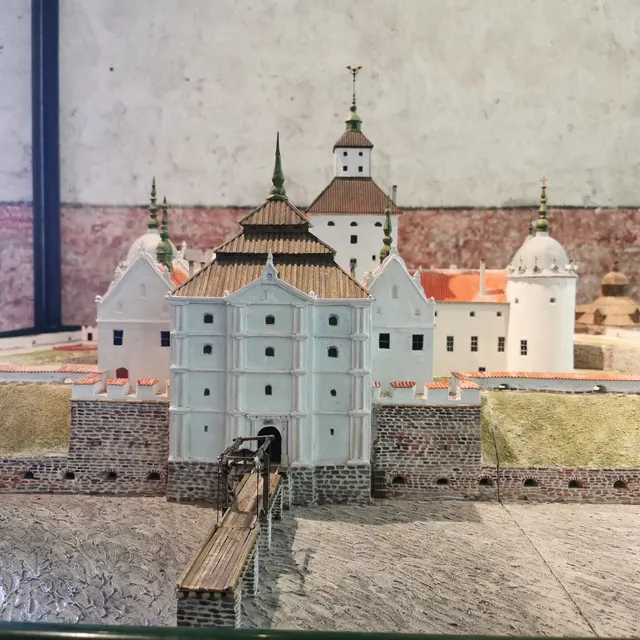
The castle's true transformation came in the 16th century, when Gustav I Vasa and his sons Erik XIV and Johan III rebuilt the grim medieval stronghold into a Renaissance palace fit for a royal court. Under Johan III, work from 1574 gave the towers their uniform height and reshaped the windows and façades, while inside, craftsmen created rooms that still rank among the finest Renaissance interiors in Northern Europe — the coffered, gold-leafed ceiling of the Golden Hall, the carved wooden inlay of the Checkered Hall, and the intimacy of the Queen's Suite and the King's Chamber, whose ceiling carries the date 1562.
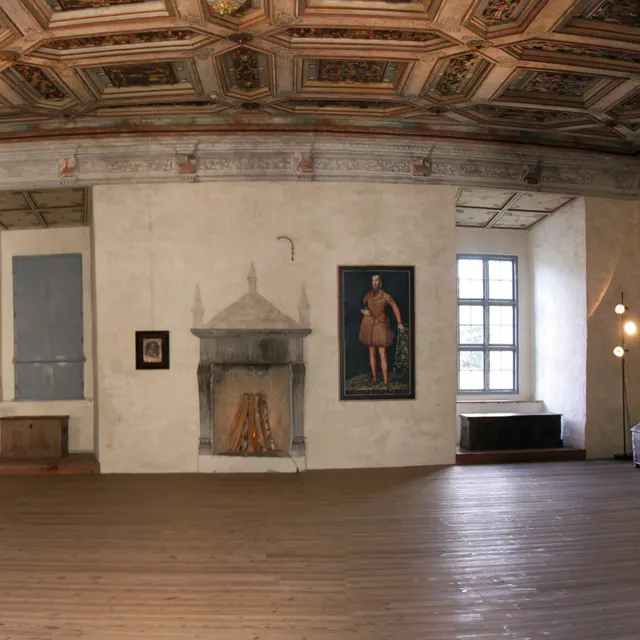
Today Kalmar Castle runs as a museum drawing roughly 190,000 visitors a year, its Renaissance halls sitting alongside a dungeon in the castle's prison tower and, in summer, a dedicated 'Children's Castle' programme that turns the fortress into an adventure for younger visitors. We handle the ticketing so your date-specific admission is confirmed before you arrive — one less thing to plan once you're in Kalmar.
Visitor guide
The dungeon floor
Twenty-one trapdoors set into the floor of the prison tower. Lift one to read what is underneath.
Kalmar Castle (Swedish: Kalmar slott) stands on a small island at the mouth of the Kalmar strait on Sweden's south-east coast, facing the island of Öland across the water. Its origins reach back to around 1180 as a round defensive tower guarding the strait, and during the 13th century it grew into a proper fortress with a ring wall and round corner towers — an expansion the castle's own history credits to King Magnus Ladulås in the later 1200s, though the national property board dates it earlier. In 1397 that fortress hosted the signing of the Kalmar Union, binding Sweden, Norway and Denmark under a single crown — one of the pivotal moments in Scandinavian history. In the 16th century, Gustav I Vasa and his sons Erik XIV and Johan III rebuilt the fortress into a Renaissance royal palace, and after a long 18th-century decline as a granary, distillery and prison, a 19th- and 20th-century restoration returned it to the form visitors see today. It is described by Sweden's national property board as the best-preserved Renaissance castle in the Nordic region, and now runs as a museum, alongside a real dungeon in the castle's prison tower and a summer 'Children's Castle' programme for families.
What is Kalmar Castle?Kalmar Castle is a Renaissance royal palace raised on top of a medieval fortress, standing on its own small island at the mouth of the Kalmar strait in south-east Sweden, directly opposite the island of Öland.Lift
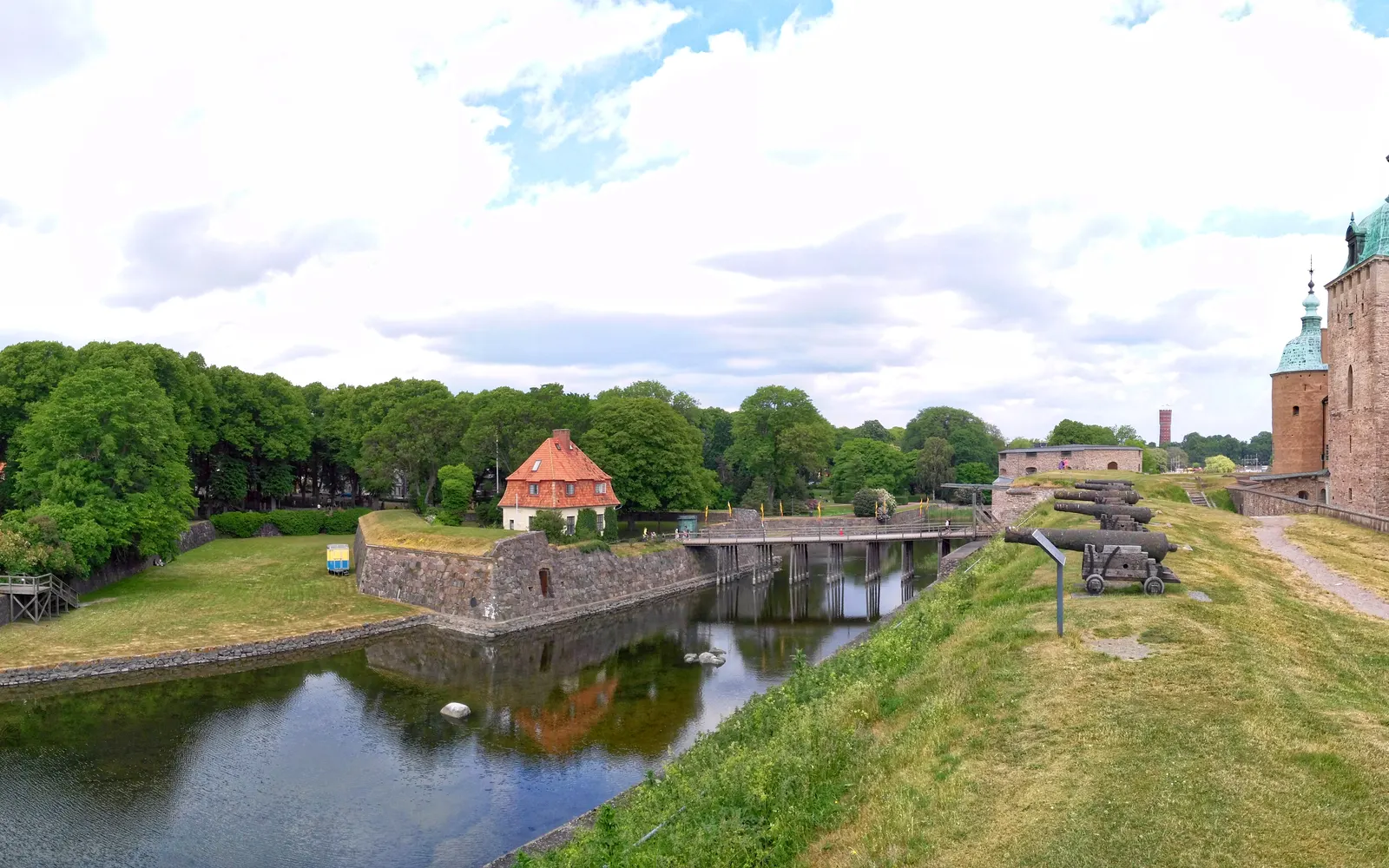
Kalmar Castle is a Renaissance royal palace raised on top of a medieval fortress, standing on its own small island at the mouth of the Kalmar strait in south-east Sweden, directly opposite the island of Öland. For roughly eight centuries it has controlled one of the most strategically important stretches of Baltic coastline — a position that, in the days before modern Sweden had a fixed southern border, earned it the nickname "Rikets nyckel" — the Key of the Realm. Today it is run as a museum, with permanent exhibitions covering the Kalmar Union, the Kalmar War and the golden age of the Vasa kings, alongside a full circuit of furnished Renaissance state rooms and medieval fortifications open to visitors.
What makes Kalmar unusual among Nordic castles is how completely its two identities survive side by side: underneath, a working medieval stronghold of thick curtain walls, round towers and a moat; on top and inside, one of the most lavishly decorated Renaissance courts ever built in the region, added wholesale by the Vasa dynasty in the 16th century. Few fortresses anywhere let a visitor move so directly from a bare stone dungeon to a gold-leafed ceremonial hall within the same few minutes of walking.
From watchtower to royal stronghold — the medieval castleThe earliest structure on the site was a round defensive tower, raised around 1180 to guard the narrow strait between the Swedish mainland and Öland against raiders.Lift
The earliest structure on the site was a round defensive tower, raised around 1180 to guard the narrow strait between the Swedish mainland and Öland against raiders. Kalmar's location made it a natural choke point for shipping and for the land route along Sweden's south-east coast, and the tower's job was simply to watch that passage and warn of trouble.
The tower grew into a fortress during the 13th century, with a ring wall and round corner towers added around it. The castle's own history places this in the later 1200s under King Magnus Ladulås (Magnus III), while Sweden's national property board dates the major expansion earlier in the century — the two accounts do not agree, and we flag the attribution rather than pick a side. From this point Kalmar Castle functioned as a proper royal stronghold, garrisoned and maintained as a key piece of the kingdom's southern defences — the role it would go on to play, on and off, for the next four centuries.
The Kalmar Union of 1397 — a turning point in Nordic historyThe castle's single most consequential moment came in 1397, when it hosted the formation of the Kalmar Union: an agreement binding Denmark, Norway and Sweden (with Finland then part of the Swedish realm) under one monarch.Lift
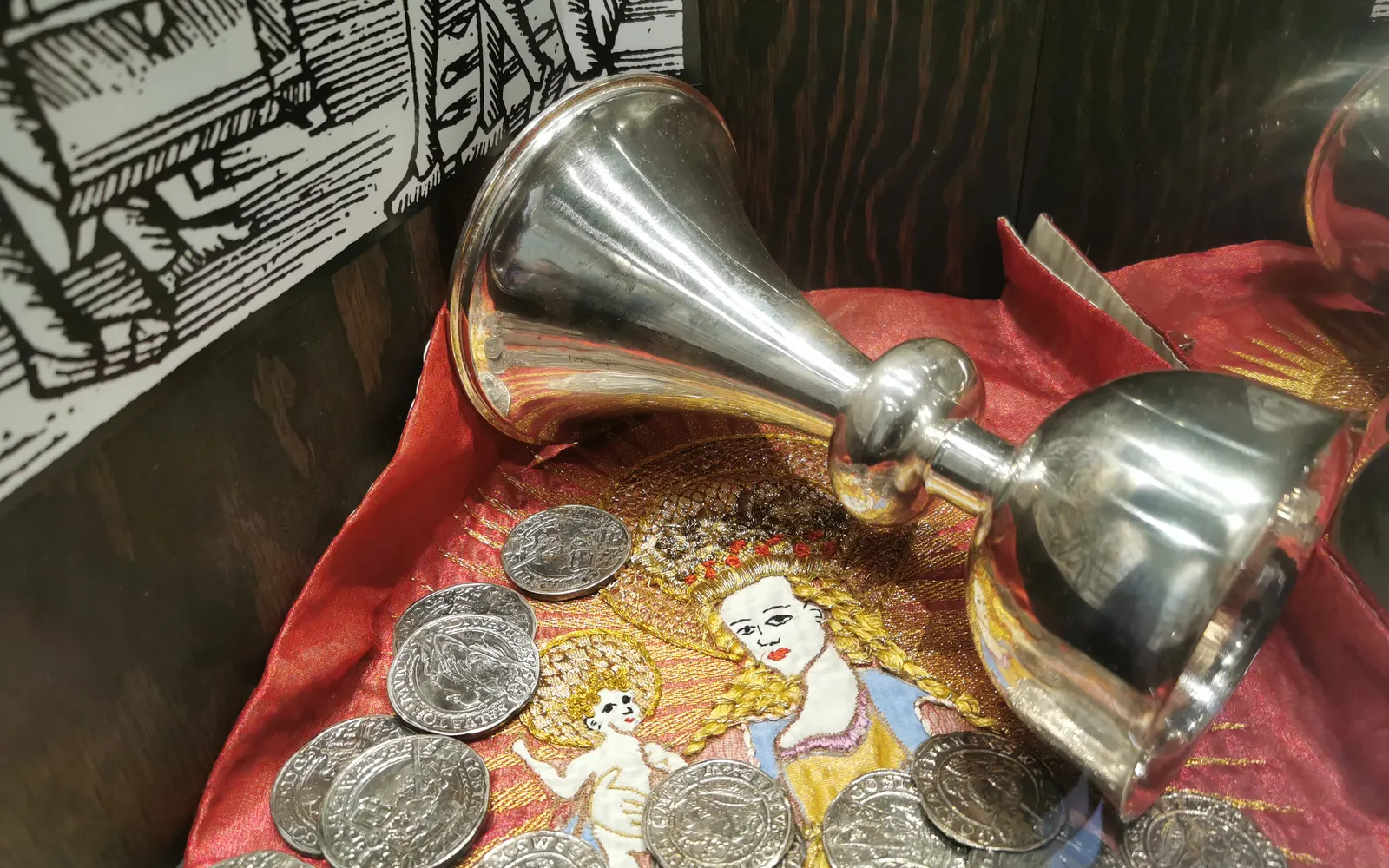
The castle's single most consequential moment came in 1397, when it hosted the formation of the Kalmar Union: an agreement binding Denmark, Norway and Sweden (with Finland then part of the Swedish realm) under one monarch. The union was organised largely by Queen Margaret I of Denmark, one of medieval Europe's most capable rulers, and it formally united the three Nordic crowns for the first time.
The Kalmar Union reshaped Scandinavian politics for well over a century, until Sweden broke away for good in the 1520s under Gustav Vasa. For a fortress that had until then been mainly a defensive asset, hosting the union's founding gave Kalmar Castle a permanent place in Nordic history — the reason its name is still recognised well beyond Sweden's borders, and the reason so many visitors come specifically to stand in the rooms where the agreement is understood to have been settled. It also explains why the castle appears so often in Swedish, Norwegian and Danish school history alike, rather than being a purely local landmark — few single buildings anywhere in the Nordic region carry that much shared weight across three national histories at once.
The Vasa Renaissance rebuildThe castle's present appearance dates from the 16th century, when King Gustav I Vasa and his sons Erik XIV and Johan III converted the medieval stronghold into a Renaissance royal residence.Lift
The castle's present appearance dates from the 16th century, when King Gustav I Vasa and his sons Erik XIV and Johan III converted the medieval stronghold into a Renaissance royal residence. This period is generally considered Kalmar Castle's golden age: the Vasa kings brought in architects, artists and craftsmen from continental Europe to modernise the fortress into a palace fit for a Renaissance monarch, layering ornate state rooms, decorated ceilings and formal apartments over the older defensive core.
The rebuild was directed by architects brought in from abroad — Jacob Richter from 1553, then the brothers Johan Baptista and Dominicus Pahr — and continued under Johan III, whose craftsmen reshaped the towers and façades into a coherent Renaissance whole and fitted out the state rooms. The Golden Hall's coffered ceiling, put up in 1576, was gilded with more than 2,200 sheets of gold leaf. The castle is today described as the most well-preserved Renaissance castle in the Nordic countries: rather than a few restored rooms, an entire sequence of state apartments built and decorated as one project.
The Golden HallThe Golden Hall (Gyllene salen) is Kalmar Castle's best-known interior: a gilded coffered ceiling that the castle describes as one of the best-preserved 16th-century examples in the Nordic countries.Lift
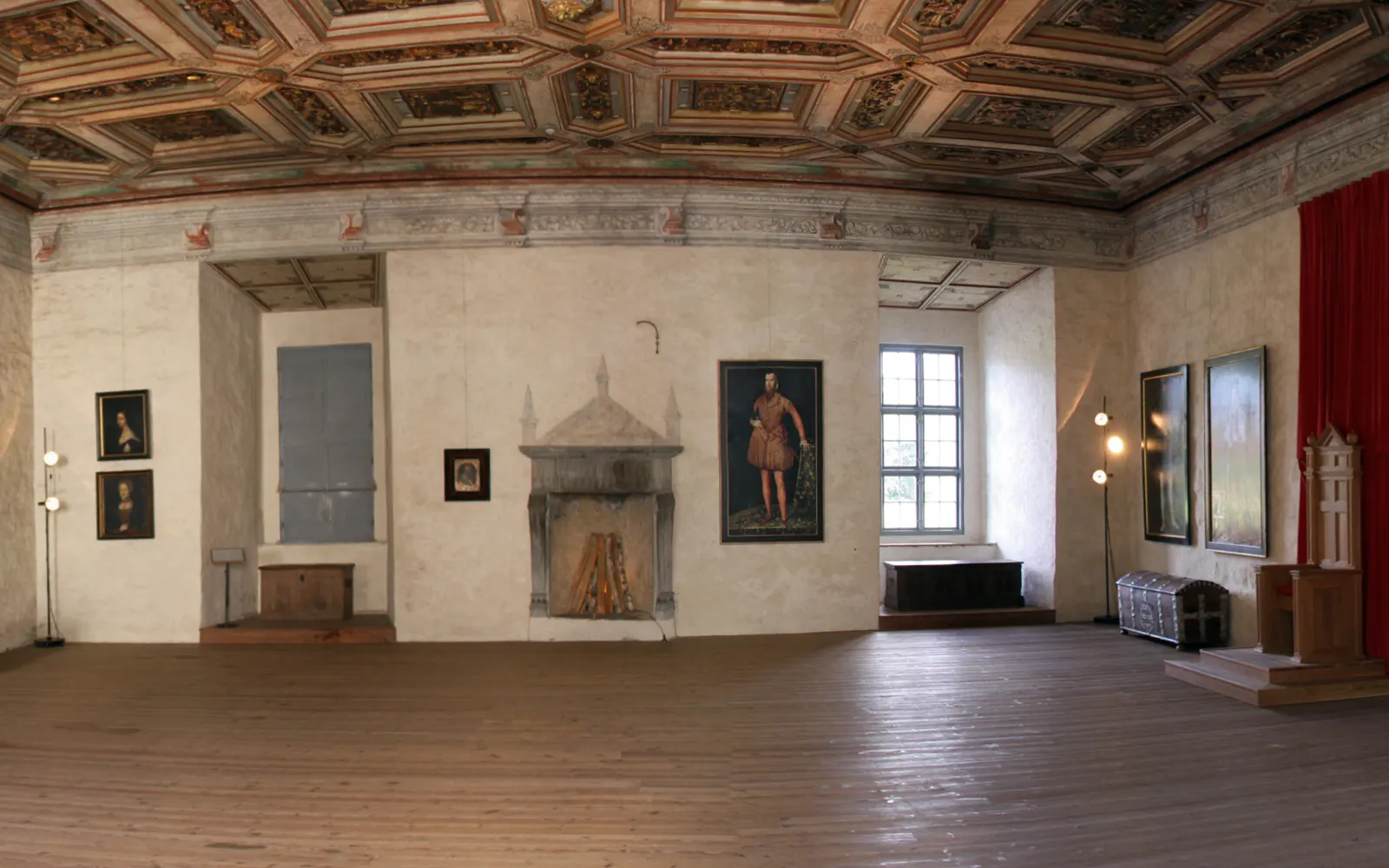
The Golden Hall (Gyllene salen) is Kalmar Castle's best-known interior: a gilded coffered ceiling that the castle describes as one of the best-preserved 16th-century examples in the Nordic countries. The ceiling was installed in 1576, when Johan III had the room newly furnished, and gilded shortly afterwards.
The hall was built as a ceremonial space for the Vasa court, and its scale and detail were meant to impress — an intentional display of royal wealth and taste aimed at visiting nobles and foreign dignitaries. It is the interior most visitors come to see, and the room the castle leads with in its own account of the building.
The Checkered Hall and the royal apartmentsThe Checkered Hall (Rutsalen) takes its name from the inlaid wood panelling lining its walls, worked in several varieties of wood and still largely original — a level of joinery rarely seen outside the grandest European courts of the period.Lift
The Checkered Hall (Rutsalen) takes its name from the inlaid wood panelling lining its walls, worked in several varieties of wood and still largely original — a level of joinery rarely seen outside the grandest European courts of the period. Like the Golden Hall, it was built to showcase the wealth and international connections of the Vasa court, and it was used by Gunilla Bielke, Johan III's second wife, for state functions.
The royal apartments carry a more intimate scale than the great ceremonial halls. The Queen's Suite holds a 16th-century bed and furnishings that evoke daily court life rather than state ceremony, while the King's Chamber — Erik XIV's bedroom from around 1560 — is lined with a 2.6-metre-high oak marquetry panel and carries the year 1562 in its ceiling, along with one of the oldest surviving depictions of Kalmar Castle, rendered in inlaid wood.
The Green Hall, the Castle Church and further state roomsBeyond the Golden and Checkered Halls, the castle's Renaissance-era rooms include the Green Hall — today used as a concert and conference space and fitted with a hearing loop for visitors who use hearing aids — along with Sturesalen and Borgstugan, smaller state and reception rooms that round out the sequence of apartments built for the Vasa court.Lift
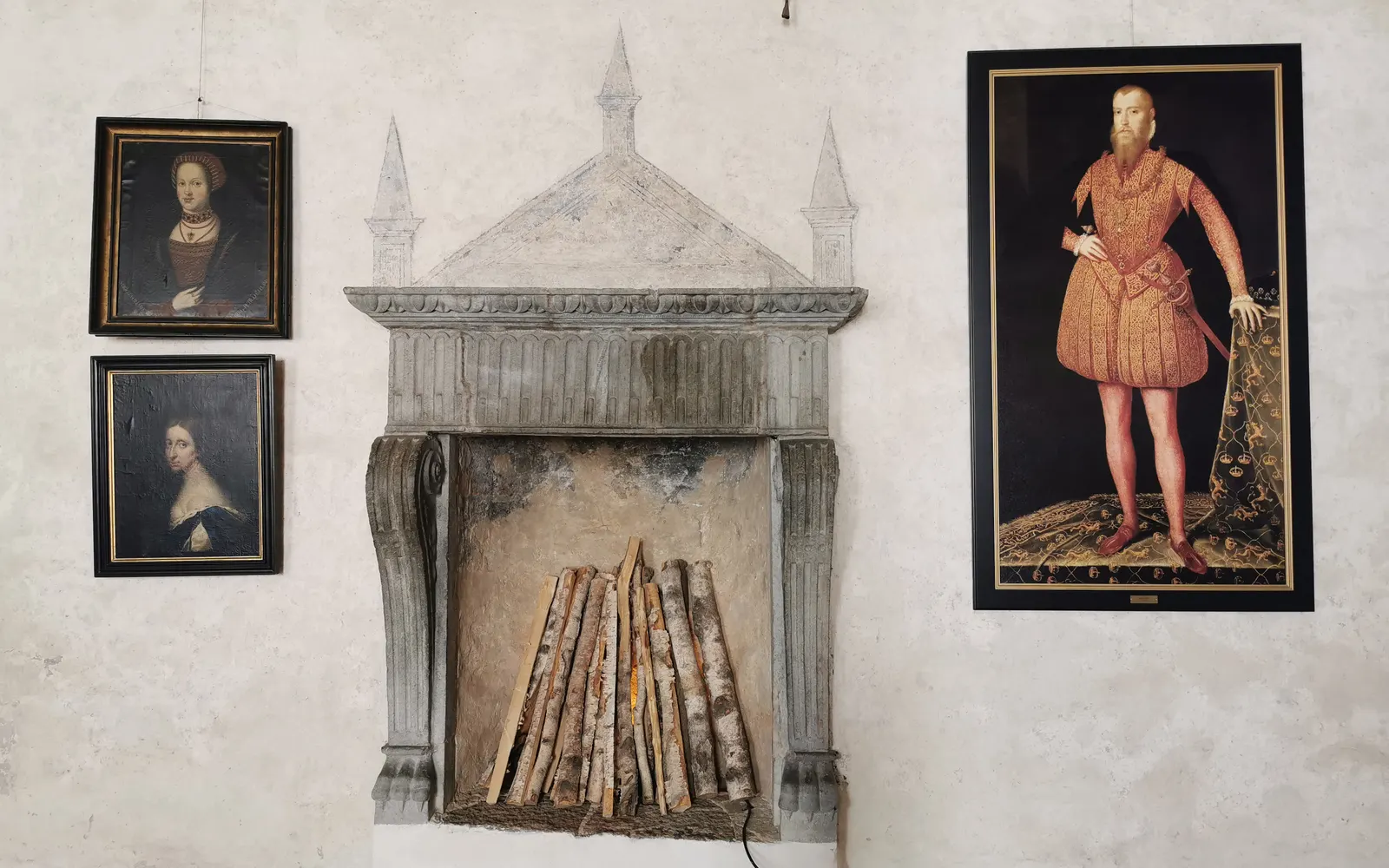
Beyond the Golden and Checkered Halls, the castle's Renaissance-era rooms include the Green Hall — today used as a concert and conference space and fitted with a hearing loop for visitors who use hearing aids — along with Sturesalen and Borgstugan, smaller state and reception rooms that round out the sequence of apartments built for the Vasa court.
The castle also has its own Castle Church (Slottskyrkan), used for services and ceremonies through much of its history and still an active part of the site today. Together these rooms give the Renaissance circuit real depth beyond its two headline halls, and all of them, along with the Golden Hall, are reachable by lift for visitors who cannot use the stairs.
The medieval fortifications and the castle's prison towerBelow and around the Renaissance state rooms, the castle's older medieval fabric survives largely intact: thick curtain walls, round corner towers, and a moat that once made the fortress a genuine island stronghold rather than a decorative feature.Lift
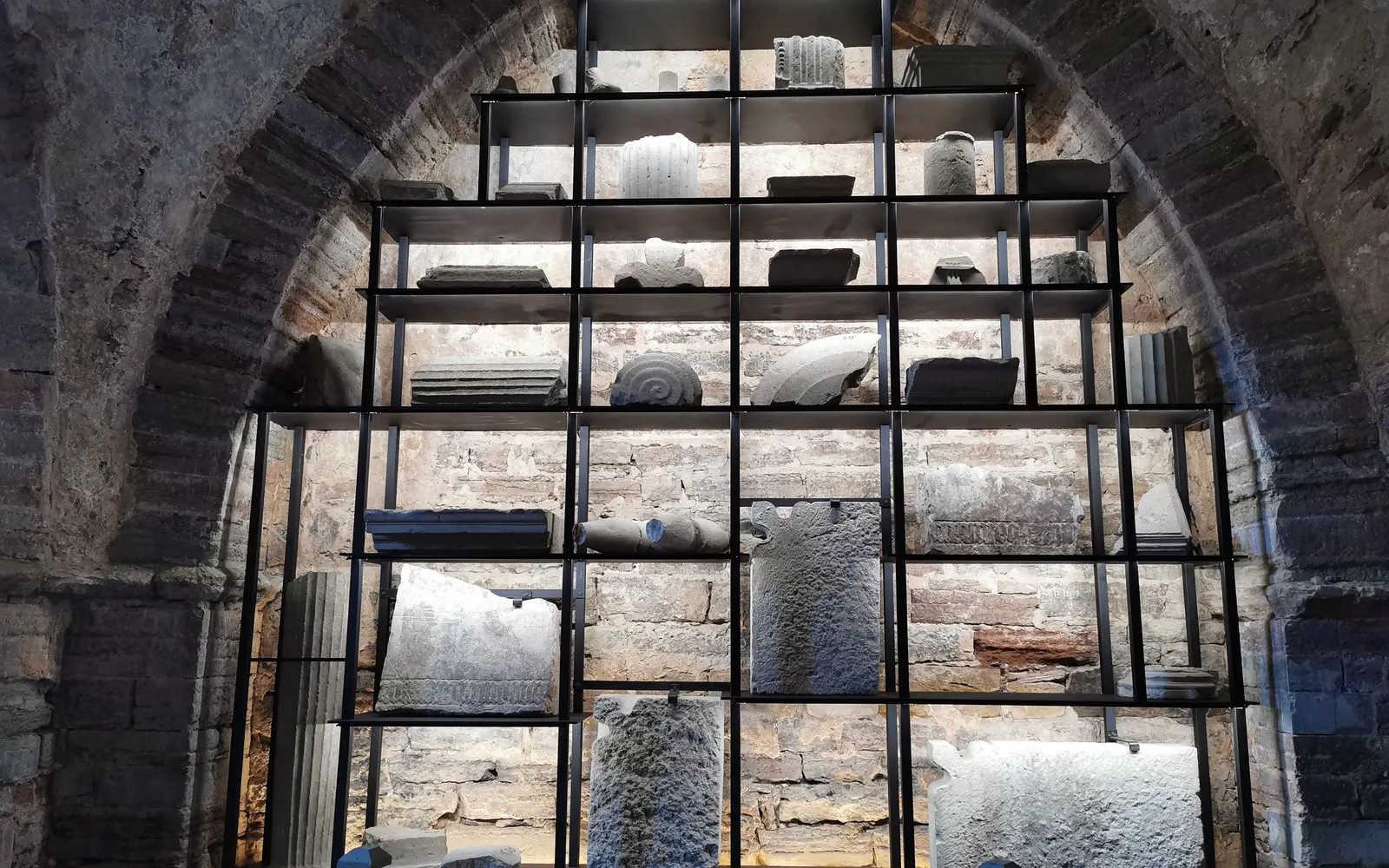
Below and around the Renaissance state rooms, the castle's older medieval fabric survives largely intact: thick curtain walls, round corner towers, and a moat that once made the fortress a genuine island stronghold rather than a decorative feature. Visitors can walk the ramparts and take in views across the water toward Öland — a stark contrast to the gilded interiors just a few steps away.
The castle's prison tower — Fångtornet in Swedish — was its earliest prison, and the castle held prisoners from the 1200s onwards. The public exhibition on that side of the castle's history is Kvinnofängelset, the 19th-century women's prison, furnished with pieces original to the early 1800s and covering crime, punishment and the lives of convicted women from the 1400s to the 1800s. Together the fortifications and the prison rooms round out a visit that would otherwise focus mainly on the Vasa-era state rooms.
Sieges, bloodshed and the wars that battered the castleKalmar's position on a contested frontier meant the castle saw real violence long after its Renaissance makeover.Lift
Kalmar's position on a contested frontier meant the castle saw real violence long after its Renaissance makeover. In 1599, during the War against Sigismund — the succession struggle that followed Johan III's reign, pitting King Sigismund III against his uncle Duke Charles of Södermanland (later Charles IX) — a garrison loyal to Sigismund held Kalmar Castle under siege before capitulating on 12 May 1599. Days later the castle's commanders — the noblemen Johan Sparre, Kristoffer Gyllengrip and Lars Rålamb — were beheaded, an event remembered as the Kalmar Bloodbath (Kalmarblodbadet). A little over a decade later, the Kalmar War of 1611–1613 between Sweden and Denmark saw the town and castle besieged and fought over directly, underlining that the fortress's defensive role had not disappeared under all the gilding.
A fire in 1642 gutted the hall above the castle kitchen and much of the eastern part of the castle; that hall was never restored and is still called Förbrända salen, the burned hall. Kalmar Castle's history is, in that sense, two stories running in parallel: a Renaissance showpiece on the surface, and a genuinely fought-over border fortress underneath.
Decline — granary, distillery and prisonSweden's strategic position changed decisively after the Great Northern War, and the 1721 Treaty of Nystad marked the end of the country's dominance of the Baltic.Lift
Sweden's strategic position changed decisively after the Great Northern War, and the 1721 Treaty of Nystad marked the end of the country's dominance of the Baltic. With the military threat that had justified Kalmar's upkeep now much reduced, the castle drifted out of active use as a royal residence and fortress, and its maintenance was allowed to lapse through the 18th century.
In its diminished state the castle was put to a series of thoroughly unglamorous practical uses: a crown distillery was set up in the castle kitchen in 1780 under Gustav III, with the hall above it turned over to grain storage, and part of the complex served as a prison until the inmates were moved to Kalmar's purpose-built cell prison in 1852. It is a striking gap between what the building had been built to be and what it was actually used for by that point — and a reminder of how close Kalmar Castle came to being lost as a heritage site altogether.
Restoration — bringing the Renaissance palace backSerious restoration work began in the mid-19th century, under the patronage of King Oscar I, after more than a century of decline had left the castle in poor condition.Lift
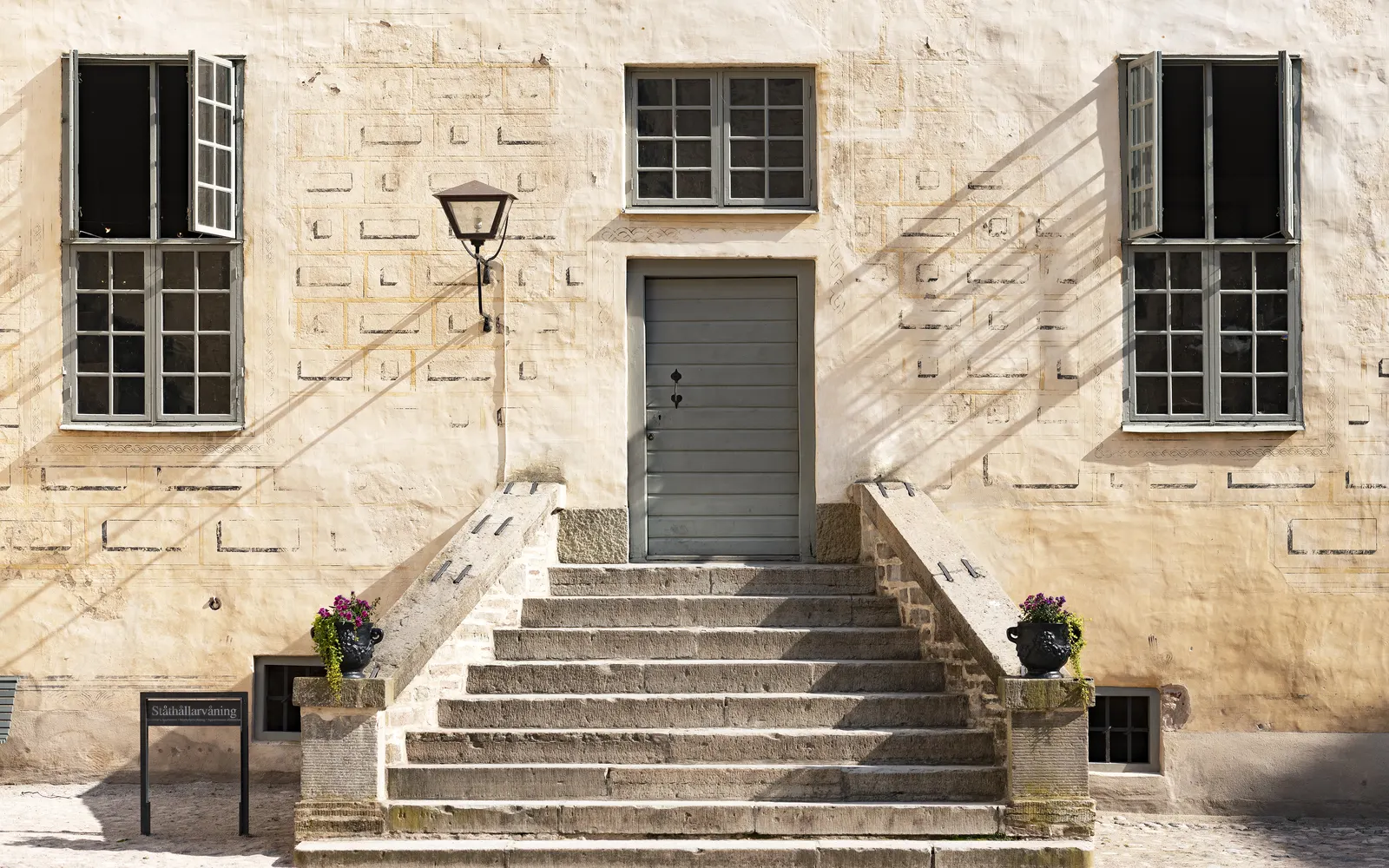
Serious restoration work began in the mid-19th century, under the patronage of King Oscar I, after more than a century of decline had left the castle in poor condition. The architect Fredrik Wilhelm Scholander led the initial campaign of 1856–61, followed by Carl Möller in 1885–91 and Martin Olsson between 1919 and 1941, and successive campaigns of conservation work through the later 19th and into the 20th century gradually returned the state rooms, façades and surrounding water defences to something close to their Renaissance appearance, with work continuing on different parts of the complex over several decades.
That long restoration effort is why Kalmar Castle today reads as a coherent Renaissance palace rather than a patchwork of ruins and rebuilds — the interiors visitors walk through, including the Golden Hall's celebrated ceiling, are the product of careful, historically grounded conservation as much as of the original 16th-century construction.
Kalmar Castle todayKalmar Castle now operates as a museum, with permanent exhibitions telling the story of the Kalmar Union, the Kalmar War and the golden age of the Vasa kings, alongside rotating temporary exhibitions that change from year to year.Lift
Kalmar Castle now operates as a museum, with permanent exhibitions telling the story of the Kalmar Union, the Kalmar War and the golden age of the Vasa kings, alongside rotating temporary exhibitions that change from year to year. The full circuit takes in the Renaissance state rooms, the medieval fortifications and the castle's prison tower on a single ticket, and the site is operated today by Destination Kalmar, with the building owned and maintained by Statens fastighetsverk (the Swedish National Property Board), continuing the conservation work begun in the 19th century.
Guided tours are part of the regular programme rather than an optional extra layer — the castle states that all guided tours, exhibitions and children's activities are included in the admission price rather than sold separately, rather than sold separately. The castle publishes its visitor information in Swedish and English and also offers tours in Swedish sign language; if you need a tour in another language, check with the castle before you travel.
How entry worksWe book your admission for a date rather than a timed slot: your ticket is valid across that day's opening hours, with no need to arrive at a fixed time.Lift
We book your admission for a date rather than a timed slot: your ticket is valid across that day's opening hours, with no need to arrive at a fixed time. The castle publishes opening hours rather than entry slots. That makes it a flexible arrangement — useful if your travel plans on the day are uncertain, or if you want to pair the castle with an old-town walk or a trip across to Öland without worrying about a booked entry window.
Family tickets covering two adults with two, three or four children are available for visiting as a group, alongside individual adult, youth, student and senior admission. In summer, tickets can be preordered ahead of time for priority in the queue until midday, or bought as a normal walk-up purchase on the day. Whichever ticket type you choose, admission covers the full circuit of Renaissance state rooms, the medieval fortifications and the castle's prison tower.
The summer Children's Castle programmeDuring the peak summer season, Kalmar Castle runs a dedicated 'Children's Castle' (Barnens Slott) programme aimed squarely at families.Lift
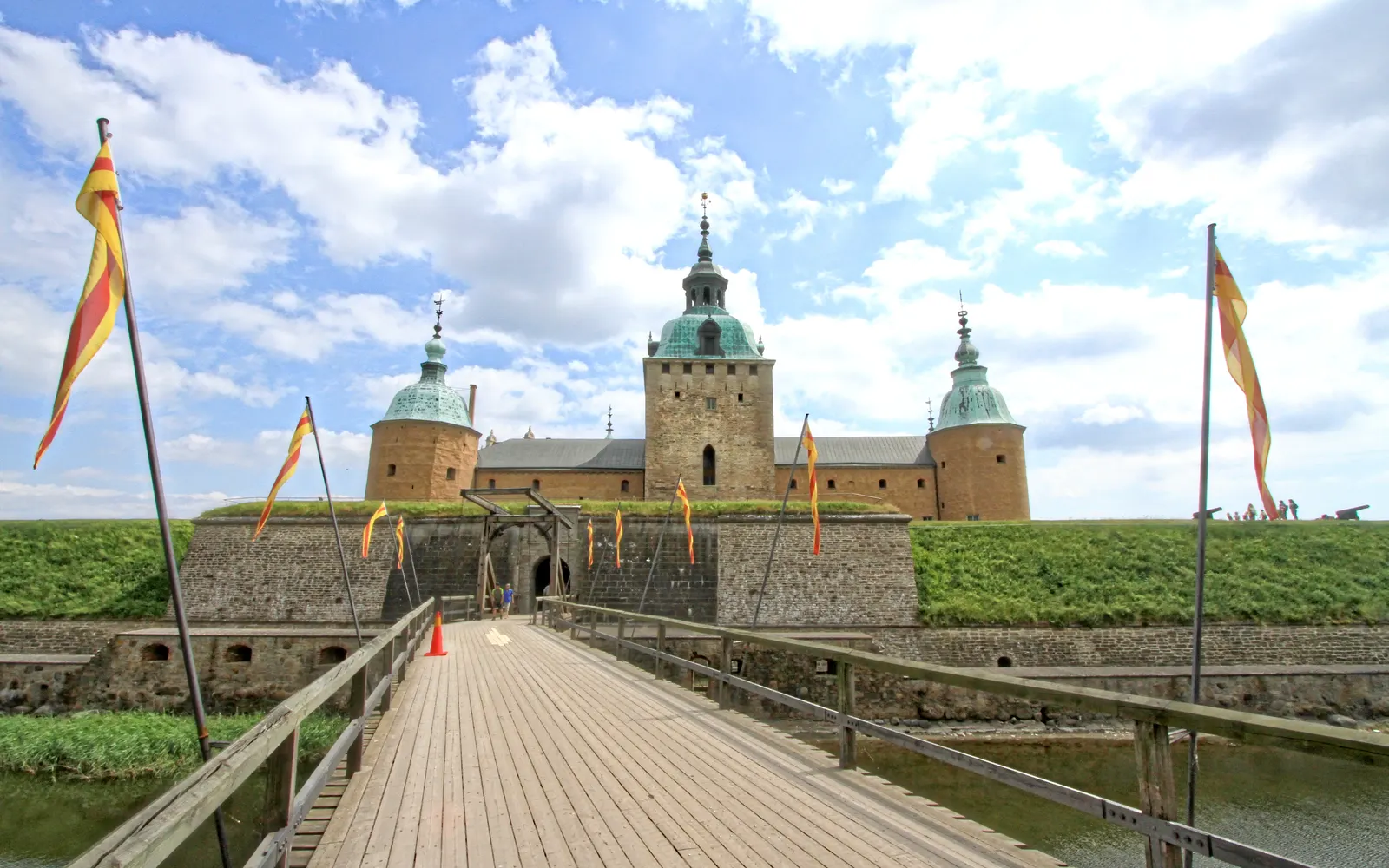
During the peak summer season, Kalmar Castle runs a dedicated 'Children's Castle' (Barnens Slott) programme aimed squarely at families. Activities have historically included knight-themed challenges, staged combat and theatre performances, and treasure hunts around the fortress, alongside guided tours pitched at younger visitors. Plan to accompany younger children throughout.
The Children's Castle typically runs on its own slightly shorter daily hours than the main castle during the summer weeks, and further activities are laid on during Swedish school holidays outside the main summer season as well. The programme runs in the same weeks as the castle's longest opening hours, so it is worth building into your planning either as the reason to visit or as something to plan around.
Getting to Kalmar CastleKalmar Castle sits close to the city centre: the operator's own directions put it about 750 metres from Kalmar's central bus and train station, roughly a 10-minute walk along the avenue and through the castle park.Lift
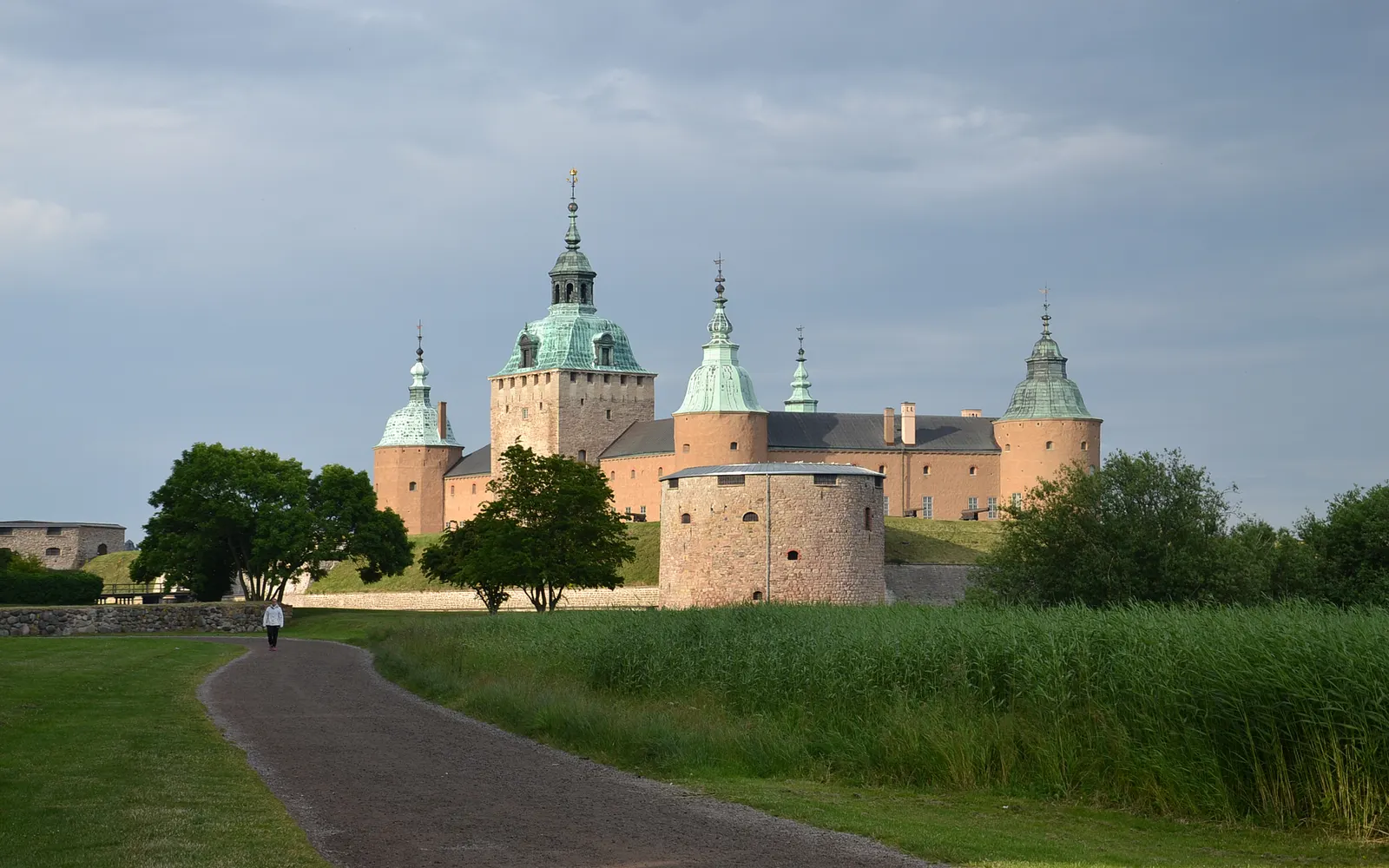
Kalmar Castle sits close to the city centre: the operator's own directions put it about 750 metres from Kalmar's central bus and train station, roughly a 10-minute walk along the avenue and through the castle park. That makes the castle an easy one to reach without a car, whether you are arriving by train or already staying in central Kalmar.
Kalmar itself is served by direct or one-change rail connections from both of Scandinavia's biggest hubs: around 4.5 hours from Stockholm with one change, and around 3.5 hours on a direct train from Copenhagen. This makes Kalmar Castle a realistic day trip or short stopover from either city, and a natural stop for anyone travelling along Sweden's south-east coast toward or from Öland.
Parking and arriving by carKalmar Castle does not have a large dedicated visitor car park at the gate.Lift
Kalmar Castle does not have a large dedicated visitor car park at the gate. Street parking is available in the surrounding area, and a larger car park serves central Kalmar near the railway station, a short walk from the castle. For visitors with a mobility need, accessible parking is available at the end of the castle avenue, about 100 metres from the entrance.
Because central Kalmar is compact, most visitors — whether arriving by car, train or on foot from a hotel in town — end up covering the last stretch to the castle on foot through the castle park, which is itself an attractive approach to the site rather than a chore.
On the day — what to knowA visit to Kalmar Castle moves between two very different kinds of space, and a little preparation helps make the most of both.Lift
A visit to Kalmar Castle moves between two very different kinds of space, and a little preparation helps make the most of both. The medieval fortifications and tower stairways include narrow stone spirals with uneven floors in places, so comfortable, low-heeled shoes are worth more here than in the grander Renaissance halls.
Opening days and hours both change through the year, and the castle is not open daily year-round. In 2026 it opens daily 10:00–16:00 through most of the main season (26 March–1 November), 10:00–17:00 from 1–21 June and 10–30 August, and 10:00–18:00 at the summer peak (22 June–9 August), with an early close on Midsummer's Eve (10:00–14:00); in winter, late autumn and December it opens 11:00–15:00 — daily over Christmas–New Year and in the February school-break week, but on selected days only (Thursday–Sunday, or weekends) at other times, with multi-day gaps between periods and no opening on New Year's Day. Dates change each year, so it is essential to confirm the castle is open on your travel date rather than assume a daily schedule. The castle is cash-free throughout — admission, the shop and the restaurant all take card or electronic payment only, so bring a card rather than relying on cash. Personal photography is generally welcome, though flash and tripods may be restricted near the historic Renaissance decoration to protect it; on-site signage will guide you.
AccessibilityKalmar Castle is only partly accessible for wheelchair users, given its age and the survival of genuine medieval fabric throughout the site.Lift
Kalmar Castle is only partly accessible for wheelchair users, given its age and the survival of genuine medieval fabric throughout the site. A lift reaches several of the main Renaissance rooms — the Green Hall, the Castle Church, Borgstugan, Sturesalen and the Golden Hall — with a door opening of 90 cm and a cabin of 145 by 167 cm. Not every public area is reachable this way, and the older fortifications and tower stairways in particular are not step-free.
An attendant or companion always has free admission alongside a visitor who needs assistance, and an accessible toilet is available in the outer courtyard. A hearing loop is fitted in the Green Hall for visitors who use hearing aids. Prams are not permitted indoors, for conservation and evacuation reasons, but can be parked in the inner courtyard by Drottningtrappan, the Queen's Staircase; a baby carrier can be borrowed from the castle shop against ID. If you have specific accessibility needs, contacting the castle ahead of your visit to plan a suitable route is worthwhile.
Food, shop and other facilitiesThe castle has its own restaurant serving lunch, coffee and light meals, with children's portions and pancakes on the menu.Lift
The castle has its own restaurant serving lunch, coffee and light meals, with children's portions and pancakes on the menu. Visitors who prefer to bring their own food can eat it at the picnic benches on the outer courtyard and castle lawn, though not inside the castle or the restaurant.
A gift shop is on site for souvenirs and books, and — as with the restaurant and admission itself — only takes card or electronic payment, since the castle operates on a cash-free basis throughout. Dogs are welcome in the outer courtyard and on the ramparts, with water bowls provided, though only guide dogs are permitted inside the state rooms; diaper-changing facilities are available in three of the restrooms. Strollers cannot be taken into the furnished state rooms for conservation and safety reasons, but can be left in the inner courtyard while you tour the interior, and a baby carrier can be borrowed from the castle shop against ID as a deposit.
Combining Kalmar Castle with the rest of the regionBecause the castle sits right at the edge of Kalmar's compact old town, most visitors treat the two as a natural pair — the castle first, then a walk through the old town's cobbled streets to Kalmar Cathedral (Kalmar Domkyrka), a 17th-century baroque church on the main square designed by the noted architect Nicodemus Tessin the Elder and widely regarded as one of Sweden's finest baroque buildings.Lift
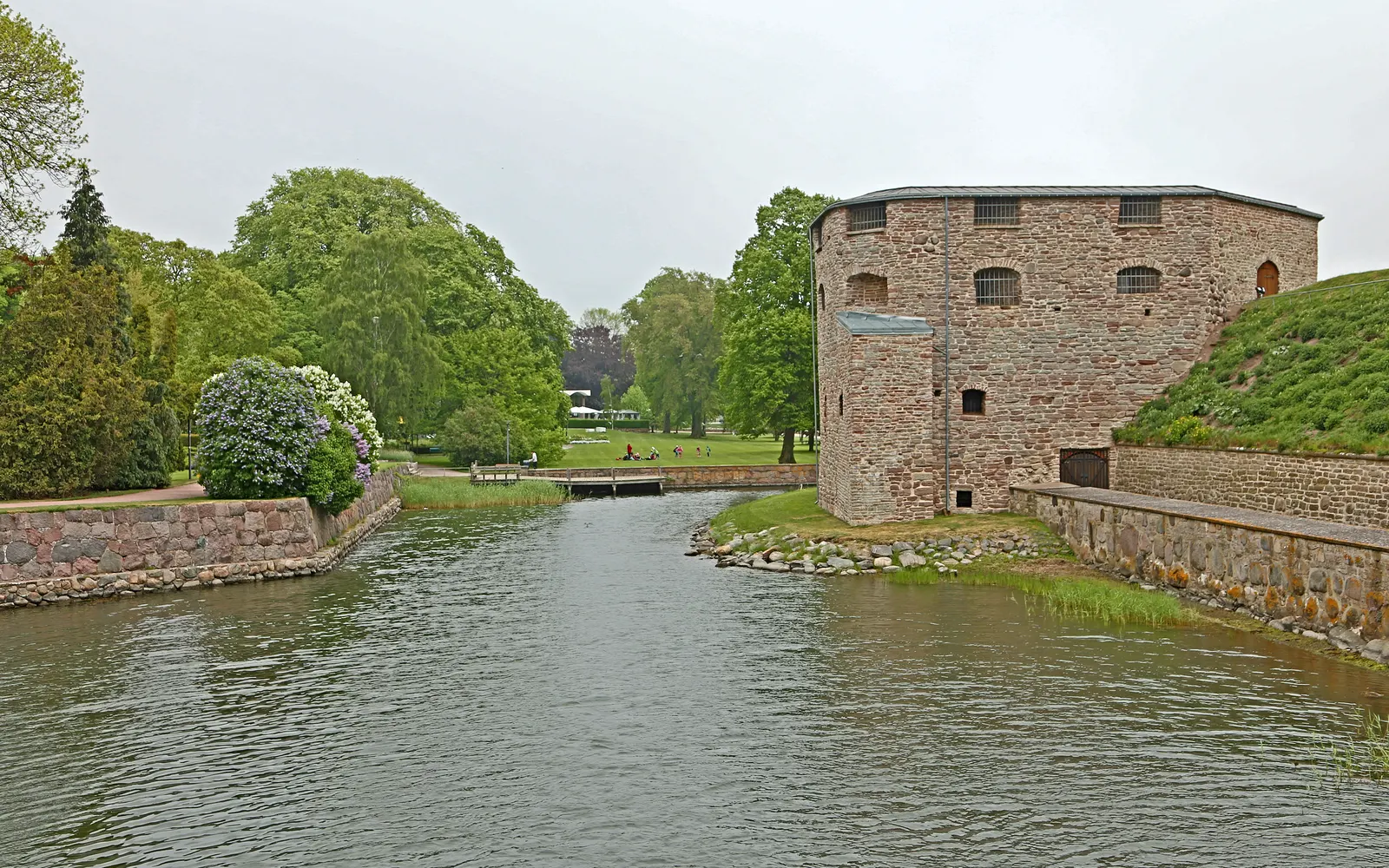
Because the castle sits right at the edge of Kalmar's compact old town, most visitors treat the two as a natural pair — the castle first, then a walk through the old town's cobbled streets to Kalmar Cathedral (Kalmar Domkyrka), a 17th-century baroque church on the main square designed by the noted architect Nicodemus Tessin the Elder and widely regarded as one of Sweden's finest baroque buildings.
Travellers continuing on to the island of Öland cross via the Öland Bridge (Ölandsbron), a 6-kilometre beam bridge opened in 1972 that remains Sweden's longest bridge on domestic territory — many see the castle first before heading across for beaches, windmills and Öland's own historic sites, including the UNESCO-listed agricultural landscape of the island's south. Because your Kalmar Castle ticket is date-specific rather than timed, it is easy to slot the visit into whichever part of the day suits the rest of your south-east Sweden itinerary best.
Common misconceptionsThe most common mix-up is over UNESCO status: Kalmar Castle is not, and has never been, a UNESCO World Heritage Site.Lift
The most common mix-up is over UNESCO status: Kalmar Castle is not, and has never been, a UNESCO World Heritage Site. It is a nationally significant historic monument and one of Sweden's best-preserved Renaissance palaces, but it does not carry the UNESCO inscription that some visitors assume it must have given its scale and history. The confusion often comes from Sweden's other south-east coast World Heritage properties — the Naval Port of Karlskrona, inscribed in 1998, and the Agricultural Landscape of Southern Öland, inscribed in 2000 — which are separate sites entirely, in different towns, and unrelated to the castle beyond sharing the same broad region.
A second, smaller misconception is that the castle is purely a medieval building. In fact most of what visitors actually walk through and photograph — the Golden Hall, the Checkered Hall, the royal apartments — is a 16th-century Renaissance addition built on top of the older medieval defences, not the medieval fortress itself. The two eras sit directly on top of each other, which is part of what makes a visit worthwhile: you see both a fought-over frontier fortress and a Renaissance royal court within the same walls.
Practical
The Queen’s mirrors
Opening days and hours both vary by season, and the castle is not open daily year-round. In 2026, peak summer (22 June–9 August) runs 10:00–18:00 daily; 1–21 June and 10–30 August run 10:00–17:00; the rest of the daily season (26 March–31 May and 31 August–1 November) runs 10:00–16:00. Winter, late autumn and December run 11:00–15:00 — daily over the Christmas and New Year period and in the February school-break week, but on selected days only at other times (Thursday–Sunday, or weekends), with several multi-day gaps between periods. The castle is closed on New Year's Day, and Midsummer's Eve closes early (10:00–14:00). Dates are published a year at a time and change annually, so we confirm the castle is open on your chosen date before we ticket it, and we'll flag any closure or shortened day.
Kungsgatan 1, 392 33 Kalmar, Sweden.
Kalmar Castle sits a short walk from the bus and train stops at Kalmar Central Station — about 750 metres, roughly a 10-minute walk, through the castle park. Kalmar is reached from Stockholm by train in around 4.5 hours (at least one change, usually at Alvesta), and from Copenhagen in around 3.5 hours, with most Öresundståg services running direct.
Ground-floor courtyard areas and parts of the Renaissance state rooms are accessible, but the older fortifications and tower stairways involve uneven stone floors, steps and narrow spiral staircases that are not step-free. Wheelchair users and visitors with limited mobility should contact the castle ahead of a visit to confirm which routes and rooms are reachable.
Large backpacks and suitcases are best left at your accommodation — the castle's older stairways and passages are narrow, and the castle does not advertise a left-luggage service at the entrance.
Personal, non-commercial photography is generally welcome; flash and tripods may be restricted in some rooms to protect the historic Renaissance decoration, and signage on site will tell you where.
Guides
Five tents on the tilt yard
-
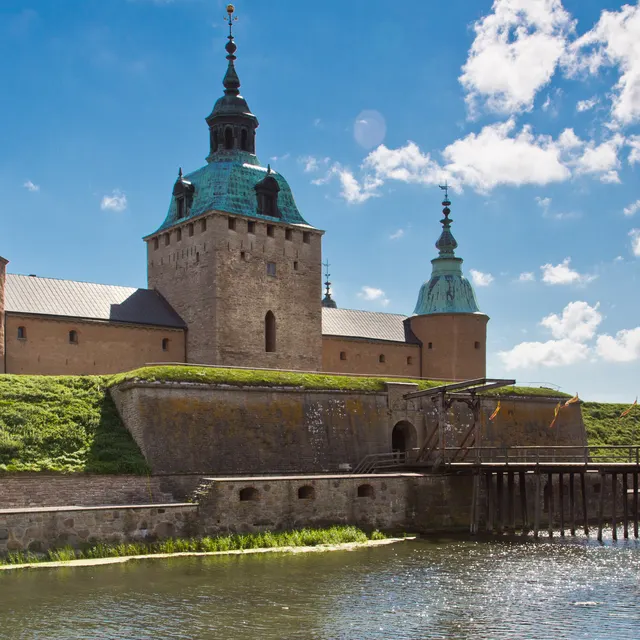 Best Time to Visit Kalmar Castle 7 min · Read the guide →
 -
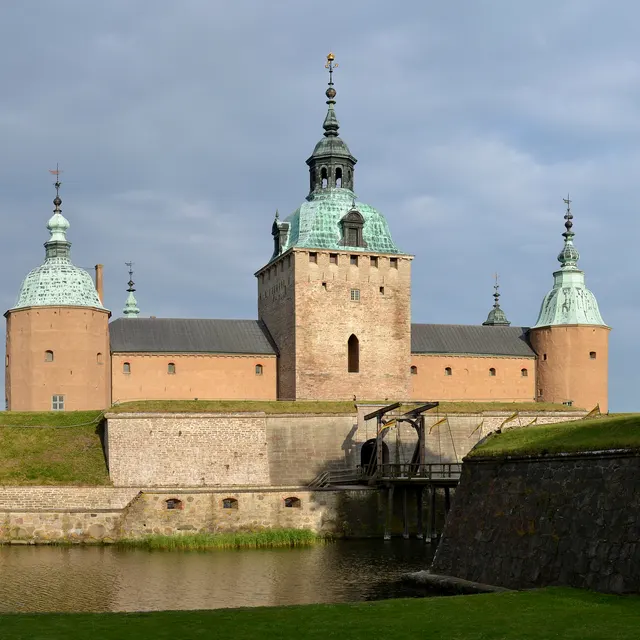 Getting to Kalmar Castle from Stockholm or Copenhagen 7 min · Read the guide →
 -
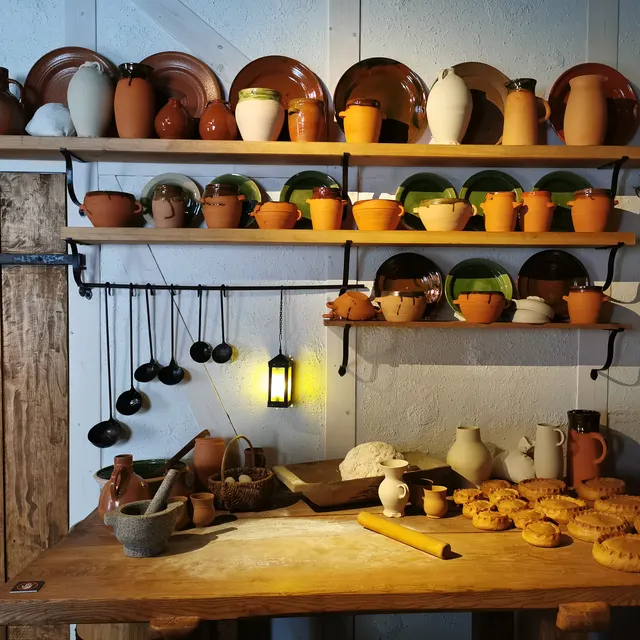 Visiting Kalmar Castle with Kids 7 min · Read the guide →
 -
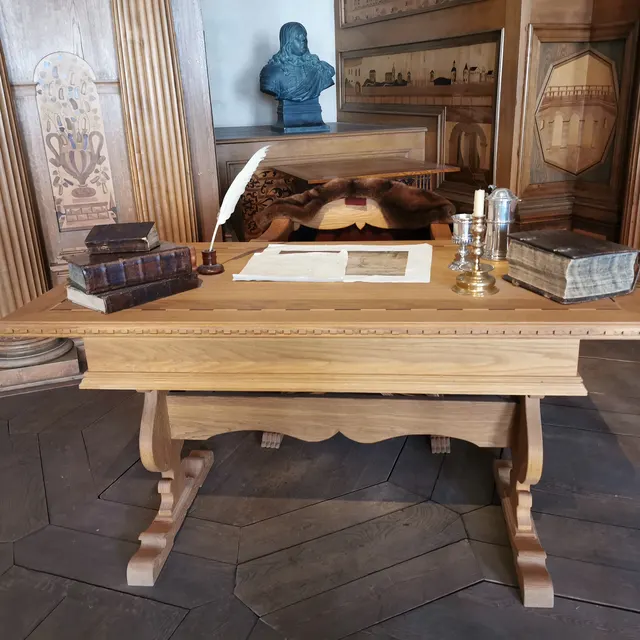 What to See Inside Kalmar Castle 7 min · Read the guide →
 -
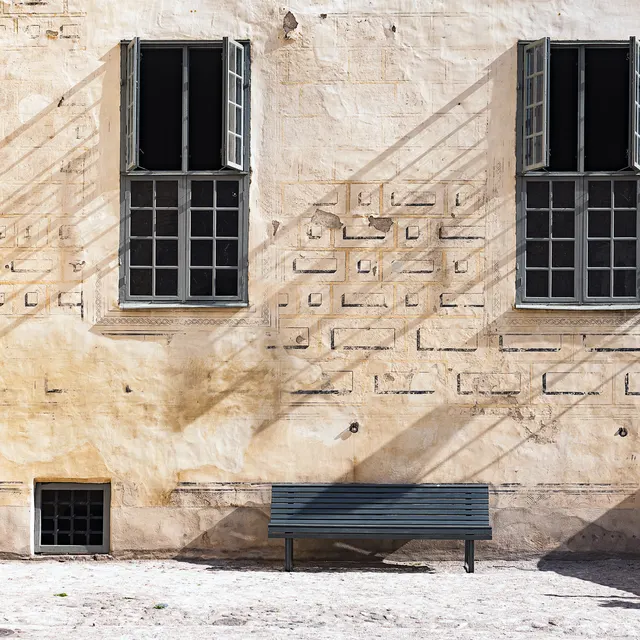 The History of Kalmar Castle 7 min · Read the guide →
Included with every ticket
Your 5-minute Kalmar Castle pre-visit briefing
A short, calm narrative — what this castle was, the Kalmar Union sealed within its walls, the Vasa kings who rebuilt it into a Renaissance court, what to look for between the Golden Hall and the castle's prison tower, and why the Checkered Hall still stops visitors in their tracks. Listen on the walk in from the station.
- c.1180 — a round defensive tower is raised at the mouth of the Kalmar strait to guard the Baltic approach
- 13th century — a ring wall and round corner towers turn the watchtower into a fortress, credited by the castle to Magnus Ladulås
- 1397 — the Kalmar Union unites Sweden, Norway and Denmark under one crown, signed inside these walls
- 16th century — Gustav I Vasa and his sons Erik XIV and Johan III rebuild the fortress into a Renaissance royal palace
- Today — the Golden Hall, the Queen's Suite, the King's Chamber, the Checkered Hall and the castle's prison tower, one ticket for the whole site
- Best timing: book ahead — the castle gives pre-purchased tickets priority in the queue until midday in summer, when the Children's Castle programme also runs
Questions
The distillery pipes
Do I need to visit at a specific time?
No fixed time slot — your ticket is date-specific rather than timed, so it's valid any time during opening hours on the day you choose. Just arrive within opening hours on your selected date.
Is this a skip-the-line ticket?
Your admission is reserved and confirmed before you arrive, so you don't queue at the ticket desk to buy — and during summer the castle gives pre-purchased tickets priority in the queue until midday. There's no timed entry to coordinate: you choose the day, we handle the booking.
What's included in the ticket?
Full access to the Renaissance state rooms and the medieval fortifications — the Golden Hall, the Queen's Suite, the King's Chamber, the Checkered Hall and the castle's prison tower. It's one ticket covering the whole castle for the day.
How and when do I get my ticket?
We send your ticket to your email as a mobile ticket with a QR code once your booking is confirmed. There's nothing to print — show it on your phone at the entrance.
How do I get to Kalmar Castle?
The castle is a walkable 750 metres, about 10 minutes, from Kalmar's city centre and railway station, through the castle park. From Stockholm it's around 4.5 hours by train with one change; from Copenhagen it's a direct train of around 3.5 hours.
How long does a visit take?
Most visitors spend two to three hours exploring the state rooms, the fortifications and the castle's prison tower — longer if the Golden Hall or the Children's Castle programme particularly interest you. There's no fixed schedule, so you set the pace.
Is Kalmar Castle good for children?
Yes. In summer the castle runs a dedicated 'Children's Castle' programme, and the mix of towers, ramparts and a real dungeon in the castle's prison tower tends to capture children's imaginations year-round. The older stairways are narrow, so keep younger children close.
Who qualifies for the student and senior prices?
The student rate applies with a valid student ID shown at the gate. The senior rate applies by age, with proof of age occasionally requested — our student and senior tickets are priced for these categories.
Are young children free?
Yes — children under 4 enter free. Our youth ticket covers ages 4 to 19, and the family tickets cover 2 adults with 2, 3 or 4 children in that age range.
What do the family tickets include?
Each family ticket covers 2 adults plus 2, 3 or 4 children aged 4–19 depending on which size you choose, with full access to the whole castle — it's the most economical way for a family to visit together rather than buying separate tickets.
Is the castle accessible for visitors with limited mobility?
Partially. Ground-floor courtyard areas and parts of the Renaissance state rooms are generally accessible, but the older fortifications and tower stairways have uneven stone floors and narrow spiral staircases that are not step-free. Contact the castle ahead of your visit to plan a suitable route.
Can I take photos inside the castle?
Yes, personal photography is generally welcome. Flash and tripods may be restricted in a few rooms to protect the historic Renaissance decoration, and signage on site will tell you where that applies.
Is Kalmar Castle open every day?
No — and it's worth checking before you fix your dates. In 2026 the castle opens daily from 26 March to 1 November, over the Christmas–New Year period and in the February school-break week; through much of January, February, March, November and December it opens on selected days only (Thursday–Sunday, or weekends) on shorter 11:00–15:00 hours, with several multi-day gaps between periods. It is closed on New Year's Day, and Midsummer's Eve closes early. Dates change each year, so we confirm the castle is open on your chosen date before we ticket it.
What is the Kalmar Union, and why did it happen here?
In 1397, representatives of Sweden, Norway and Denmark met at Kalmar Castle to unite the three kingdoms under a single crown — the Kalmar Union, organised by Queen Margaret I of Denmark. It's one of the pivotal events in Scandinavian history, and it happened inside this castle.
What is the Golden Hall?
The Golden Hall (Gyllene salen) is Kalmar Castle's grandest Renaissance room. Its coffered ceiling is described by the castle as one of the best-preserved 16th-century examples in the Nordic countries — a highlight of any visit.
Can I change my mind after booking?
Because admission is date-specific, please choose your travel date with care when you book. All sales are final once confirmed; the only exception is a full refund if the operator cancels your visit. See our terms for the full policy.
Are you the official castle ticket office?
No. We're an independent concierge service for international visitors. We obtain a genuine admission ticket on your behalf and handle the booking in your own language. Our service fee is included in the price shown.
What currency am I charged in?
The price you see is the price you pay — we show it in your local currency where we can and charge exactly that amount, with no surprise fees at checkout. Payment is by card on a secure page.
More steam
What is Kalmar Castle?
Kalmar Castle (Kalmar slott) is a Renaissance royal palace built on top of a medieval fortress at the mouth of the Kalmar strait in south-east Sweden, with origins reaching back to around 1180. It is where the 1397 Kalmar Union uniting Sweden, Norway and Denmark was signed, and it was later rebuilt into a Renaissance royal residence by Gustav I Vasa and his sons Erik XIV and Johan III in the 16th century. It now runs as a museum and is described as the best-preserved Renaissance castle in the Nordic region, alongside its original medieval fortifications and the castle's prison tower.
Do I need to book a specific time slot?
No. Entry is date-specific rather than timed, so your ticket is valid any time during opening hours on the date you choose. Simply arrive within the published opening hours on your selected day.
What can you see inside Kalmar Castle?
The Renaissance state rooms hold the Golden Hall, the Checkered Hall, the Queen's Suite and the King's Chamber, dated 1562 in its ceiling, plus the Green Hall, the Castle Church, Sturesalen and Borgstugan, while the older fortifications include the castle's prison tower, its dungeon, and the ramparts along the moat — all covered by the same ticket.
Is Kalmar Castle a UNESCO World Heritage Site?
No. Kalmar Castle is not a UNESCO World Heritage Site — it is one of Sweden's best-preserved Renaissance palaces and a nationally significant historic monument, but UNESCO status has not been granted. The nearby Naval Port of Karlskrona (inscribed 1998) and the Agricultural Landscape of Southern Öland (inscribed 2000) are separate UNESCO-listed sites in the same broad region, and are sometimes mistaken for the castle itself.
How long does a visit to Kalmar Castle take?
Most visitors spend two to three hours exploring the state rooms, the fortifications and the castle's prison tower. Because entry is date-specific rather than timed, you can move through the site at your own pace, and a guided tour can extend that if you take one of the included tours of the royal apartments or dungeon.
Is Kalmar Castle suitable for children?
Yes — a dedicated summer 'Children's Castle' programme runs during peak season, with knight-themed challenges, treasure hunts and performances, and the mix of towers, ramparts and a real dungeon tends to capture children's imaginations year-round. The older towers' stone stairs are narrow, so keep younger children close. Note that prams cannot be taken indoors — they are parked in the inner courtyard, and a baby carrier can be borrowed from the castle shop.
Is Kalmar Castle accessible for visitors with limited mobility?
Partially. A lift reaches the Green Hall, the Castle Church, Borgstugan, Sturesalen and the Golden Hall (90 cm door opening, 145 by 167 cm cabin), and an attendant or companion has free admission. The older fortifications and tower stairways, however, have uneven stone floors and narrow spiral staircases that are not step-free. Contacting the castle ahead of your visit to plan a suitable route is worthwhile.
What was the Kalmar Union and why does it matter?
The Kalmar Union, formed at the castle in 1397, united the crowns of Denmark, Norway and Sweden (with Finland then part of the Swedish realm) under a single monarch, largely at the initiative of Queen Margaret I of Denmark. It reshaped Nordic politics for well over a century, until Sweden broke away for good in the 1520s under Gustav Vasa, and it is the single event most closely associated with the castle's place in Scandinavian history.
Who rebuilt Kalmar Castle into a Renaissance palace?
Gustav I Vasa and his sons Erik XIV and Johan III converted the medieval fortress into a Renaissance royal residence during the 16th century, generally considered the castle's golden age. The work was led by architects brought in from abroad — Jacob Richter from 1553, then the brothers Johan Baptista and Dominicus Pahr — who reshaped the towers, façades and interiors. The Golden Hall's coffered ceiling, installed in 1576 under Johan III, was gilded with more than 2,200 sheets of gold leaf.
What is the Checkered Hall?
The Checkered Hall (Rutsalen) is named for the inlaid wood panelling lining its walls, worked in several varieties of wood and still largely original — craftsmanship brought in from continental European workshops as part of the same 16th-century Renaissance building programme that produced the Golden Hall.
What is in the castle's prison tower?
The castle's prison tower — Fångtornet — was the earliest of its prisons; the castle held prisoners from the 1200s until they were moved to Kalmar's purpose-built cell prison in 1852. The exhibition telling that story is Kvinnofängelset, the 19th-century women's prison, furnished with pieces original to the early 1800s — a sharp contrast to the gilded state rooms nearby.
Did Kalmar Castle see any real fighting or sieges?
Yes. In 1599 the castle capitulated after a siege during a Swedish succession struggle and its commanders were beheaded — the Kalmar Bloodbath — and the Kalmar War of 1611–1613 between Sweden and Denmark saw the town and castle besieged directly; the castle was surrendered to the Danes in August 1611 and returned to Sweden in 1613. A fire in 1642 destroyed the hall above the castle kitchen, which was never rebuilt. The castle's frontier position meant it remained a genuine military asset long after its Renaissance makeover, not just a decorative palace.
Is it true Kalmar Castle was once a prison and a distillery?
Yes. After Sweden's strategic position weakened following the 1721 Treaty of Nystad, the castle fell into disrepair and was put to practical use: a crown distillery was set up in the castle kitchen in 1780 under Gustav III, the hall above it was used for grain storage, and part of the complex served as a prison until the inmates moved to Kalmar's new cell prison in 1852, before restoration returned it to its Renaissance form.
When was Kalmar Castle restored?
Serious restoration began in the mid-19th century under King Oscar I, after more than a century of decline, and continued in phases through the later 19th and into the 20th century — the work that returned the state rooms, façades and water defences to close to their original Renaissance appearance and produced the castle visitors see today.
What languages are guided tours available in?
The castle publishes its visitor information in Swedish and English, and also runs guided tours in Swedish sign language; for a tour in another language, check with the castle before you travel. Guided tours, exhibitions and children's activities are all included in the admission price rather than sold as optional extras.
Can I pay with cash at Kalmar Castle?
No. The castle operates on a cash-free basis throughout — admission, the gift shop and the restaurant all take card or electronic payment only, so bring a card rather than relying on cash.
Is there somewhere to eat at Kalmar Castle?
Yes. The castle has its own restaurant serving lunch, coffee and light meals, with a children's menu available. Visitors who prefer to bring their own food can eat it in the outer courtyard or on the castle walls, though not inside the dining areas.
What is the Children's Castle programme?
Children's Castle (Barnens Slott) is a dedicated summer programme for families, historically featuring knight-themed challenges, treasure hunts, theatre and guided tours pitched at younger visitors. It runs during the peak summer season on its own hours, with younger children accompanied by an adult, and further family activities run during Swedish school holidays outside the main summer period.
Can I combine a visit to Kalmar Castle with Öland?
Yes — Kalmar Castle sits close to the Öland Bridge (Ölandsbron), a 6-kilometre bridge opened in 1972 connecting the mainland to the island. Many visitors see the castle first, then cross to Öland for beaches, windmills and the island's own historic sites, including the UNESCO-listed agricultural landscape of southern Öland. Because Kalmar Castle tickets are date-specific rather than timed, it is easy to fit both into one day.
What else is worth seeing near Kalmar Castle?
Kalmar's old town is a short walk away, centred on Kalmar Cathedral (Kalmar Domkyrka), a 17th-century baroque church on the main square designed by the noted architect Nicodemus Tessin the Elder and regarded as one of the finest baroque buildings in Sweden.
Independent conciergeKalmar Castle Tickets is an independent concierge service that helps international visitors reserve and receive their admission ticket in English. We are not the castle and we are not an official vendor — we obtain a genuine admission ticket on your behalf from the castle's ticketing system.
Sources: kalmarslott.se, en.wikipedia.org Last reviewed: